Noirvember · Noir of the Month
OUT OF
THE PAST
He knows better.
He doesn’t care.
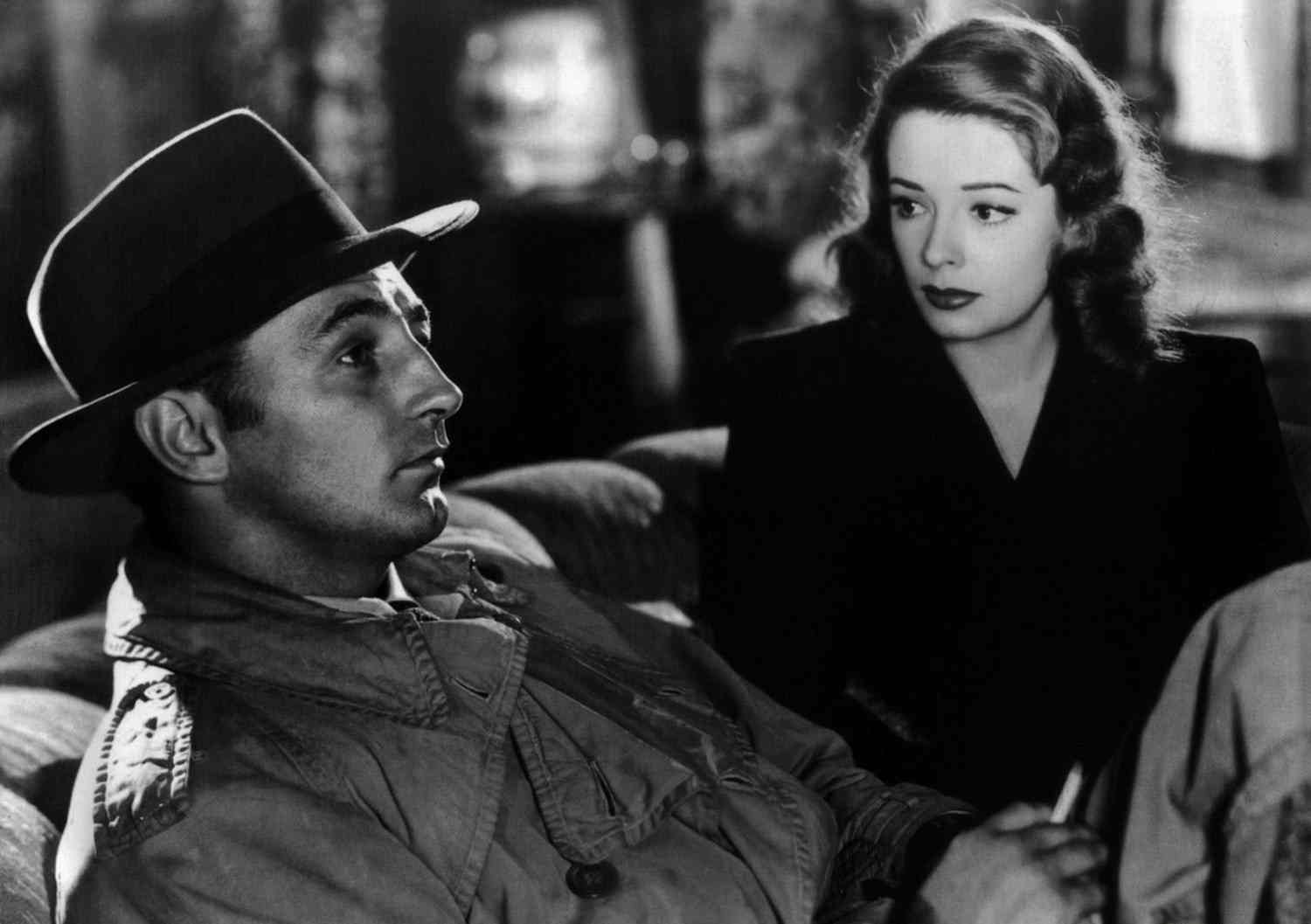
One afternoon in Acapulco
Before Out of the Past becomes a story about the impossibility of escape, it makes escape look awfully inviting.
There is Acapulco, for a start. The afternoon heat. A little café near the plaza, with darkness inside and music drifting through from the movie house next door. Jeff Markham has been waiting there over beers, half asleep, his assignment beginning to feel like an agreeable way to waste a day.
Then Kathie Moffat comes out of the sunlight.
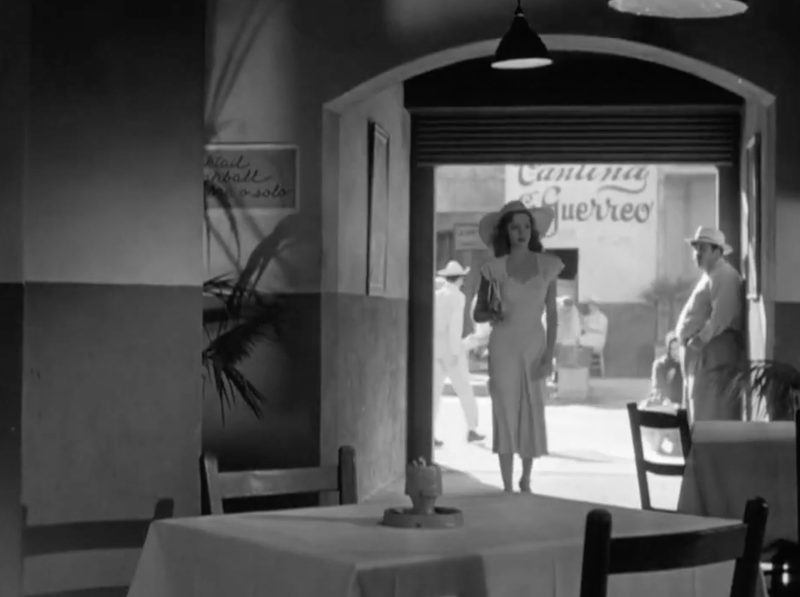
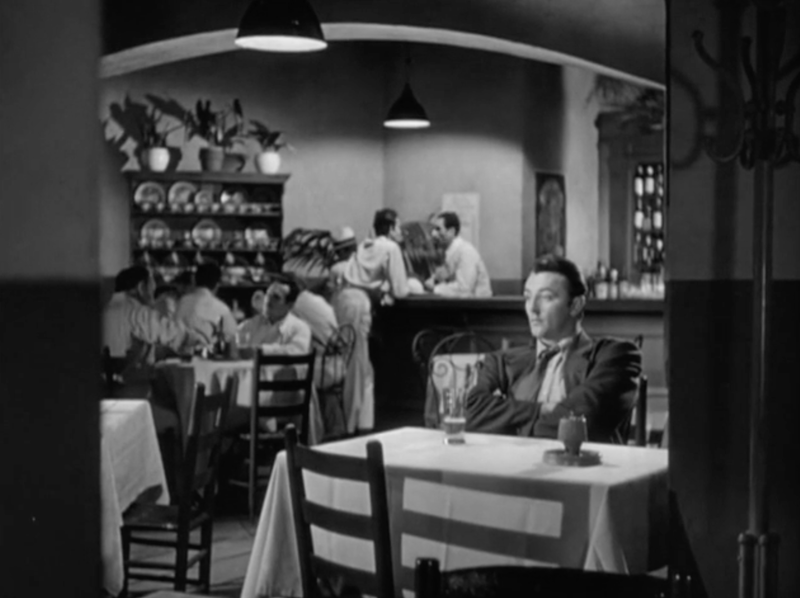
Jane Greer wears white, right up to the broad brim of her hat. Against the café’s shadows, she seems to bring some of that brightness indoors. There is nothing hurried about her. Jeff has been looking for a woman who shot a man and disappeared with his money. The woman in front of him orders a Cuba Libre.
You can almost feel the cold glass. Rum, lime, cola, ice. Outside, the heat can have the plaza. In here, there is somewhere to sit, someone to look at, and no particular reason to leave.
It has the languor of an afternoon at Hemingway’s Floridita, the temptation to let another drink turn an hour into the rest of your life. Only this is Mexico, and Jeff is supposed to be working.
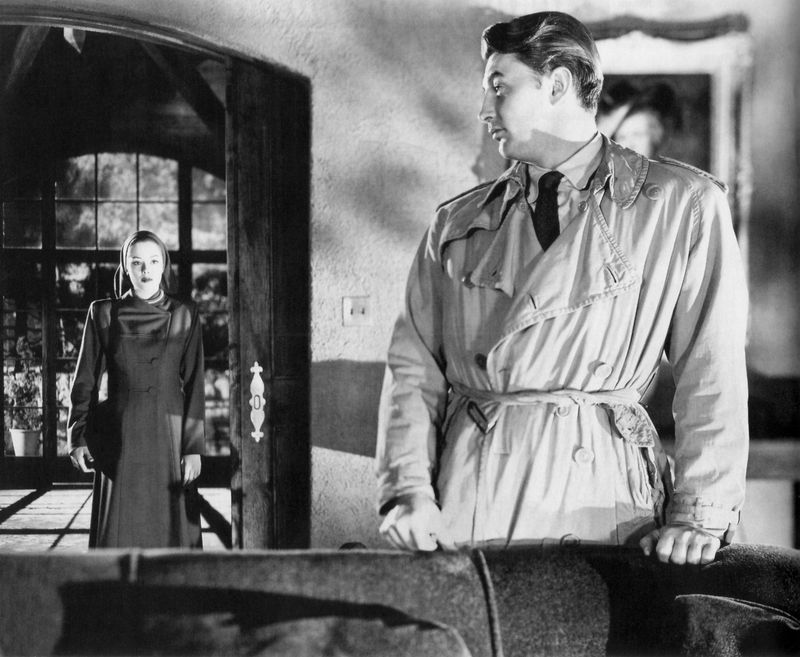
Watch Mitchum watch her. This is the pleasure the film gives us before it asks us to reckon with the consequences. We understand his distraction because, for a moment, we share it.
Recognizing the danger doesn’t save him from wanting it.
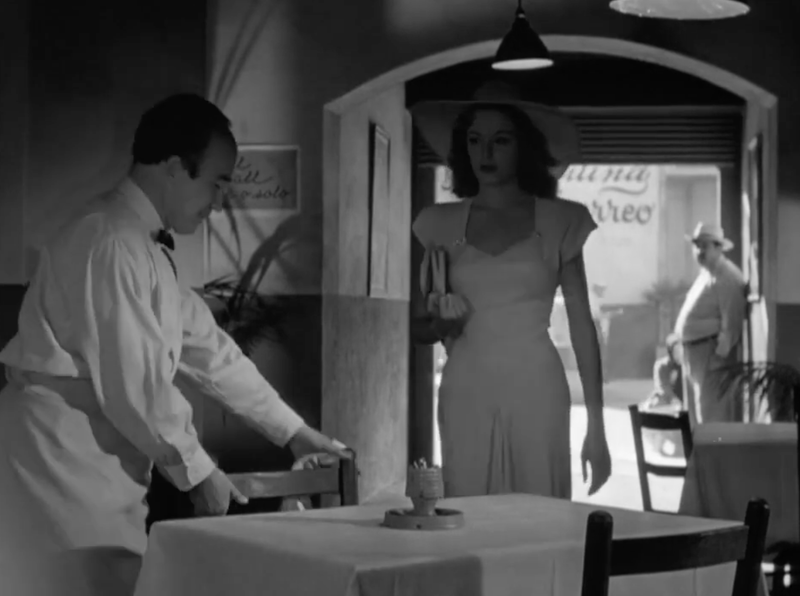
A smart man making a bad decision
Jeff is good at his job. He notices things, follows a trail and understands the people paying him. What makes his attraction to Kathie so unsettling is that he never seems entirely unaware of the risk. Intelligence and judgment turn out to be different talents.
Mitchum makes the distinction look effortless. His pauses suggest a man who has already considered the objection and decided to proceed anyway. He can hear himself becoming a sucker. He even tells us so. That awareness offers him about as much protection as his hat offers against a bullet.
This is where the film gets under the skin. Most of us have known the smaller version of that bargain. The conversation we should have ended. The person whose explanation we wanted to accept. The moment when knowing better became an inconvenience.
The woman who gives nothing away
Greer gives us remarkably little to hold on to. Kathie can be attentive, wounded, affectionate and perfectly composed. The changes are small enough that we keep searching her face, hoping the next look will settle the question.
Greer later recalled Tourneur asking for an impassive performance and discouraging wide-eyed expressions. His direction helps explain the peculiar force of her stillness. We are watching closely, but that doesn’t mean we are seeing clearly.
Her entrance in white matters for the same reason. The image offers brightness and apparent ease. Whatever we already know about Kathie, the sight of her gives us permission to reconsider. Jeff takes it.
There is no safe scenery
For a film so closely associated with shadows, Out of the Past spends a surprising amount of time in places you might choose for a holiday. The mountains, the water and the open air make another life seem possible.
Tourneur and cinematographer Nicholas Musuraca let those places keep their beauty. They also find uneasiness within it. Trees divide the light. A quiet landscape leaves room for someone to approach unseen. Getting out of the city changes the view without necessarily changing the situation.
That makes the Acapulco café more than a lovely detour. It is the film’s most persuasive invitation to believe that somewhere else, with someone else, things could be different. For a little while, we want to stay there too.
More from the director
The other worlds of Jacques Tourneur
Tourneur moved between horror, westerns and crime pictures with a gift for making ordinary places feel uncertain. If this is your introduction to him, these are six films to keep in mind.
- Cat People (1942). His landmark psychological horror film with Simone Simon. A woman fears that desire will turn her into a panther. The suspense grows out of what we cannot quite see.
- I Walked with a Zombie (1943). A Caribbean Gothic story with Frances Dee and Tom Conway. Its title promises a monster movie, but the film offers something stranger, sadder and more dreamlike.
- The Leopard Man (1943). An escaped leopard and a series of killings unsettle a New Mexico town. Tourneur makes a nighttime walk or a closed door feel terribly consequential.
- Canyon Passage (1946). A Technicolor western with Dana Andrews and Susan Hayward. Its forests, friendships and divided loyalties show how much more there was to his work than dark interiors.
- Nightfall (1956). Aldo Ray and Anne Bancroft in another noir about a man pursued by an earlier disaster. An especially good next stop after Out of the Past.
- Night of the Demon (1957). Released in a shorter version in the United States as Curse of the Demon. Dana Andrews plays a skeptic drawn into an occult threat. Tourneur makes disbelief itself feel precarious.
Further reading from BFI and Imogen Sara Smith at Criterion. Nightfall was made in 1956 and released in the United States in 1957.

Behind the picture
A few things worth knowing
Jeff nearly had a different face
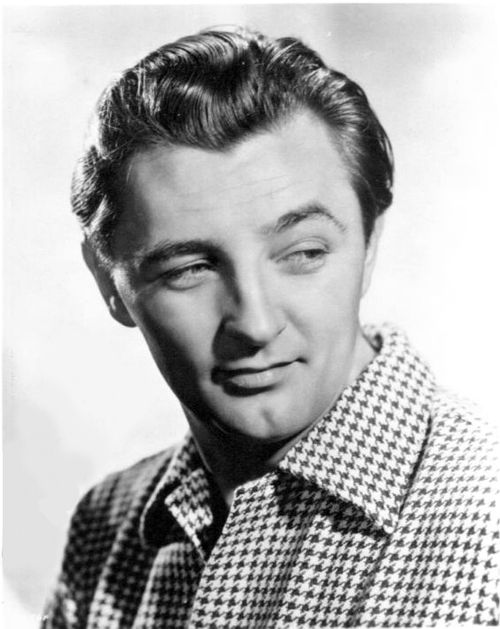
Bogart was wanted for Jeff, though the story needs a little qualification. AFI cites later accounts that novelist Geoffrey Homes requested him and Warner Bros. refused to lend him to RKO. Its production records also trace casting plans through John Garfield and Dick Powell before Mitchum. The announced director was Edward Dmytryk, who left because of a scheduling conflict. Tourneur arrived in 1946. It is hard to imagine the finished film without that particular combination of restraint and weariness, but neither man was inevitable.
Production history recorded by AFI.
A title with the ending in its bones
The source novel and the film’s working title were Build My Gallows High. Geoffrey Homes, the name on the screenplay, was Daniel Mainwaring’s pen name. The eventual title is less blunt, but it carries its own warning. Something has already happened, and it is coming back.
Novel and working title documented by AFI.
Mitchum knew the lyrics
Jane Greer remembered Mitchum asking the script supervisor for his lines as though he had barely looked at them. She tried preparing less herself, hoping to catch his spontaneity, and found that he remained word perfect while she struggled. Her eventual conclusion was that he had known his lines all along. Looking unprepared was part of the performance.
Greer’s recollection, recounted by TCM.
Two stars, one frame
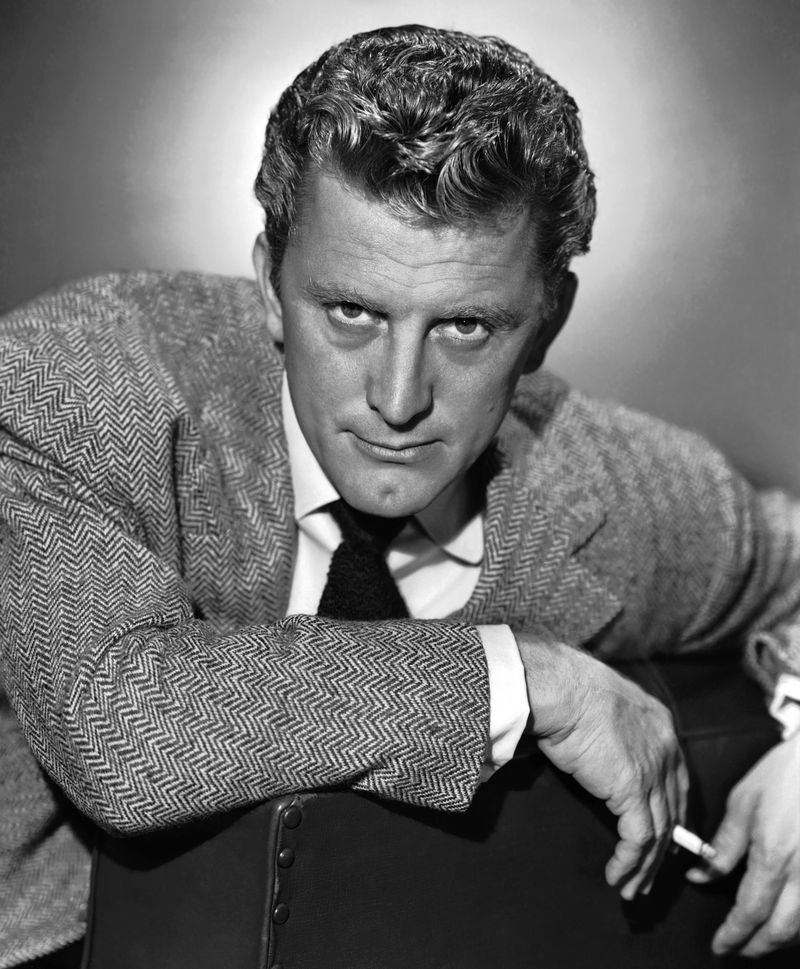
TCM recounts a bout of competitive scene stealing between Douglas and Mitchum. Douglas kept props moving, including a key chain and a coin. Mitchum retaliated with distracting faces during Douglas’s reaction shots. Tourneur intervened. Their onscreen contest for control had an offscreen counterpart.
An on-set anecdote reported by TCM.
The censors wanted separate addresses
The Production Code office objected to early scripts showing Kathie living with men outside marriage. Revisions left the arrangements less explicit. Watch how much the finished film communicates through proximity, glances and the decision to stay. The attraction survives the missing explanation.
Censorship correspondence summarized by AFI.
Some of that Mexican heat came from Hollywood
American Cinematographer explains that Mexican background footage was combined with studio photography of Mitchum and Greer through rear projection. Matte paintings supplied other details, including the exterior of Whit’s home. The atmosphere feels continuous even when the actors and the landscape were photographed separately.
Effects and photography described by American Cinematographer.
Take these to the theater
Three things to watch
- Who gets to be still. Notice when Mitchum lets another actor do the moving, talking and explaining.
- How Kathie enters a room. Before listening to her explanation, look at what the light and her clothes have already suggested.
- When Jeff makes a joke. Sometimes the wit buys him a little freedom. Sometimes it lets him avoid admitting what he knows.
On your next viewing, watch the interval between Jeff seeing Kathie and beginning to speak to her. The story is already changing before either of them has much to say.
Sources and further reading
- Production history and credits, AFI Catalog
- Stephanie Zacharek on Out of the Past, Library of Congress
- Jane Greer’s recollections of Tourneur, TCM
- Nicholas Musuraca and the film’s photography, American Cinematographer
- Dialogue transcript, including the Acapulco café sequence
- El Floridita’s account of Hemingway and the bar
- Cuba Libre ingredients, International Bartenders Association