Noirvember
Top 10 Classic Film Noirs


Put a noir in Los Angeles and I’m already leaning forward. I’ll follow a bad idea through New York or San Francisco any night of the week, but in LA I’m always looking over somebody’s shoulder. What did that corner look like? Could I still drive up that hill? In Double Indemnity, Walter Neff pulls up to a Spanish-style house and I’m thinking about the real estate right up until Barbara Stanwyck appears at the top of the stairs. That’s about as long as Walter stays interested in insurance, too.
Some of these are on every noir list, and for good reason. A few I left off could make a pretty good case for the top spot. This is the Old Movies Tonight list, which mostly means these are the ten I’m happiest to put on again. Sometimes it’s the whole damn movie. Sometimes it’s two people flirting in a bookstore.
Let’s start at ten and work our way down to one.
Murder, My Sweet (1944)
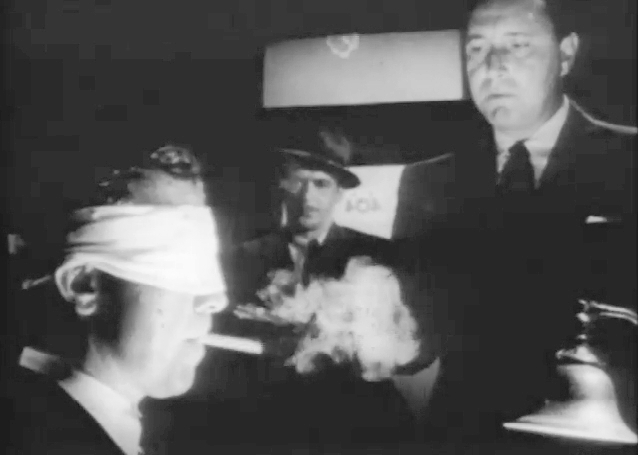

Raymond Chandler worked in the Southern California oil business before he made a living writing about Los Angeles. By the time he wrote Farewell, My Lovely, he knew how close a fine address could be to a cheap racket. Marlowe gets to walk into both places and say what he sees. That’s half the pleasure of Chandler. Even when the case is getting away from you, there’s always a reason to listen to the guy telling it.
Picture a Saturday night in 1944. You’ve paid for two tickets to Farewell, My Lovely, Dick Powell’s name is on the marquee, and you figure he’ll sing something nice before you take your date home. The lights go down and there’s Powell under a police lamp with bandages over his eyes. RKO worried that Chandler’s title might sell the wrong evening out, so it put MURDER right up front. The ticket booth could hardly be any clearer.
Then comes the story of Moose Malloy, an ex-con who hires Marlowe to find a woman named Velma. Moose is played by Mike Mazurki, a professional wrestler who kept taking bookings after he got into pictures. Years later, his get-togethers with wrestling and movie friends at a Los Angeles restaurant grew into the Cauliflower Alley Club. He could fill a doorway, but watch what happens when he talks about Velma. For all his size, there’s something painfully hopeful about him.
Bogart can make Marlowe sound like he’s already sized up the room. Powell sounds like he’s still adding up what the room is going to cost him. When Edward Dmytryk sends him through a drugged maze of smoke and doorways, you hear the same dry voice trying to make sense of things right along with you. Robert Montgomery and Elliott Gould would find their own Marlowes later. There’s a whole story in what each actor brings to Chandler’s Los Angeles. This one starts with a man who used to sing for his supper taking a job from a wrestler who wants to find his girl.
Scarlet Street (1945)


I can still hear the Bugs Bunny version of Edward G. Robinson. Rocky in Racketeer Rabbit has that familiar voice and the face of a man who expects everybody in the room to straighten up. That’s the Robinson I know from Little Caesar. In Scarlet Street, Fritz Lang gives him a watch for twenty-five years behind a cash register and sends him home to paint.
On his way home, Chris Cross sees a man knocking Joan Bennett around and steps in. Robinson was sixteen years older than Bennett, and the difference gives that first encounter a particular charge. He’s flattered Kitty would spend ten minutes with him. She’s already wondering how much his paintings sell for. The man Chris chased off is her boyfriend Johnny, played by Dan Duryea, who figures there might be a living in this. Duryea was so good at playing a man who thinks he’s got the angle. For another good dose of him, watch Too Late for Tears, where he comes to collect a bag of cash and finds out how badly he’s underestimated Lizabeth Scott.
What gets me is how alive Robinson seems after a little time with Kitty. Listen to him talk about painting. You can hear the pleasure he takes in having somebody ask. I can imagine Chris going back to work after a few visits, counting out change and thinking about what he’ll tell her the next time he sees her. Maybe she’ll want to see another painting. Maybe he’ll get a room with good light and paint on a Tuesday for once. It’s easy to picture those little plans getting bigger every time she lets him talk. Pretty soon, giving up Kitty would mean giving up the man he’d just started to imagine he could be. That’s the part that hurts.
The Asphalt Jungle (1950)
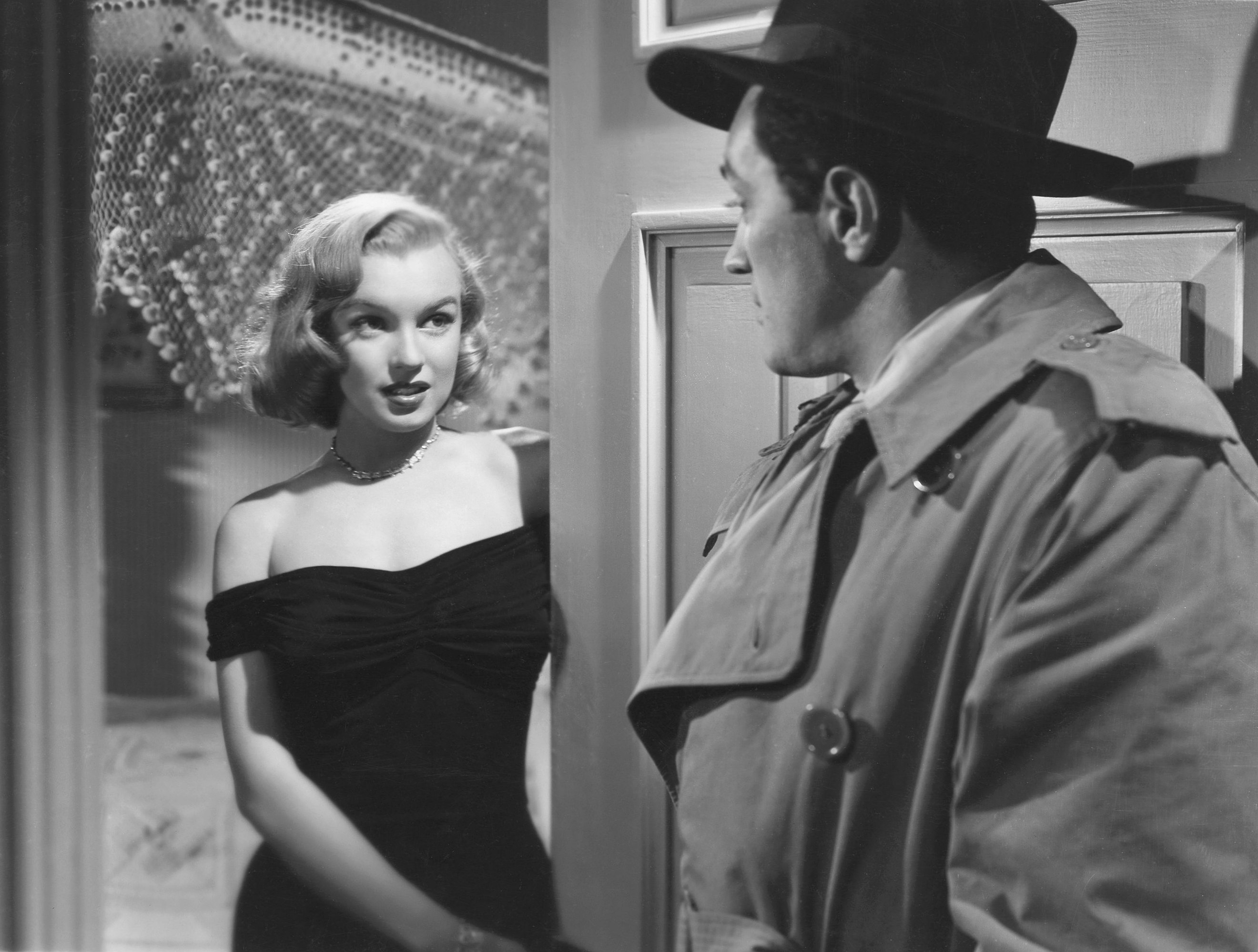

Everybody’s good at something in The Asphalt Jungle. Sam Jaffe has the plan, Sterling Hayden has the muscle, and Louis Calhern has the money. Or at least he knows how to make people think he does. They’re going after a fortune in jewels, and John Huston spends enough time showing you how the job is supposed to work that you start to think they might actually get away with it. Then one little thing goes wrong, and you find out how much you’ve come to like these guys.
I always want to place the city. It’s supposed to be somewhere in the Midwest, and there’s a bit of Cincinnati in the opening, but much of it was shot in Los Angeles and at MGM in Culver City. Huston and cinematographer Harold Rosson got out on LA streets early, before the city had much of a chance to give itself away. Inside, Rosson lit the rooms as though the light came from whatever was already there. If a guy walked out of the light in the middle of a scene, they let him disappear. Rosson made one deliberate exception to that stripped-down look. He gave Marilyn Monroe the full Hollywood lighting treatment.
She plays Angela Phinlay, the crooked lawyer’s young mistress. I love seeing her tucked away in this picture. Huston gives her a few minutes, and suddenly I want to know what Angela does all day while this man is out pretending he has money. It was her first real breakout in noir. She’d already had a small part in the juvenile crime drama Dangerous Years, and she went on to darker starring roles in Don’t Bother to Knock and Niagara. If you want to see what she could do with a whole noir, start with Niagara. Here, the fun is catching her just before everybody knew her name.
Touch of Evil (1958)


Every time I ride through Venice, I look down Windward Avenue and see a little of Touch of Evil. The old columns and covered sidewalks are still there between Pacific and the beach. Orson Welles looked at that same stretch and saw a town on the U.S.–Mexico border. Now I can be halfway through a bike ride, look up at those arches, and see the car with the bomb in it.
Welles shows us somebody slipping the bomb into the trunk, then sends the car through town in one long shot. Charlton Heston and Janet Leigh are the newlyweds on foot, and the car keeps turning up beside them. They’re trying to get across the border. I’m trying to remember how much time was on that damn clock.
Heston plays Mike Vargas, a Mexican narcotics officer who sticks around after the explosion and catches on to the way American police captain Hank Quinlan gets his convictions. Welles plays Quinlan himself, all bulk and weary authority. He’s so sure he knows who did it that planting the evidence seems to him like the shortest way to the right answer. And then there’s Marlene Dietrich, who takes one look at this man everybody calls Captain and tells him his future’s all used up. She’s barely in the movie, and I wait for her every time.
After Universal recut the film, Welles wrote a 58-page memo. One of his requests was to let the music in that opening come from the street, drifting out of bars and passing cars. The 1998 re-edit puts that idea back in. You can hear the town going about its night while the bomb ticks away. Next time I ride down Windward, I’ll probably hear it, too.
Gun Crazy (1950)


When I think of noir, I usually picture city streets. Gun Crazy takes us to a carnival that feels like it wandered in from a Western. Peggy Cummins is wearing a cowboy hat and shooting for a living. The first time I saw it, I wasn’t sure I was watching a noir. Then Cummins picks John Dall out of the crowd for a shooting contest, and there’s a moment when she looks him right in the eye and smiles before she fires. By then I didn’t much care what kind of movie it was. I was going wherever she was.
Dall plays Bart Tare, a man who’s been crazy about guns since he was a kid. Cummins is Annie Laurie Starr, a carnival sharpshooter who’d like a better living than the carnival can give her. They fall for each other over target practice, get married, and start robbing banks. It’s Bonnie and Clyde seventeen years early. The thing I love about Cummins is how much fun she’s having in that first scene. Later, when Bart starts to get scared, you can still see the woman who picked him out of the crowd. She’s having the time of her life. He’s just beginning to understand what that means.
Then there’s the bank job. I could get that back-seat angle in 4K on my phone today. Joseph H. Lewis had a Cadillac with the rear seat pulled out, a camera crew behind the actors, and hidden microphones. He keeps us in the car for the whole thing. Bart goes inside, and we’re stuck out there with Laurie, watching the street and waiting for him to come back. That’s the part I’d still have to figure out, even with the phone.
The Big Sleep (1946)


When it finally rains in Los Angeles, I want to watch The Big Sleep. There’s something about Hollywood in the rain that makes me want to be indoors with a drink, which is exactly where Philip Marlowe winds up. He ducks into the Acme Book Shop to keep an eye on the place across the street. Dorothy Malone takes off her glasses, closes the shop, and for a couple of minutes I’m ready to forget the case and watch whatever movie these two are about to get into.
Bogart and Bacall get the famous horse-racing scene, but if I had to pick the best flirtation in the picture, I’d take the bookstore. Watch Malone. She decides how the afternoon’s going to go, and Bogart is smart enough to let her. A decade later, she won an Oscar for Douglas Sirk’s Written on the Wind. She worked with Sirk again in The Tarnished Angels and went on to play Constance MacKenzie on Peyton Place. Here, a few minutes and a pair of glasses will do.
The case starts simply enough. General Sternwood hires Marlowe to look into a man collecting on his daughter Carmen’s supposed gambling debts. Before long there’s a missing man, a murder, and Lauren Bacall as Carmen’s older sister Vivian, who always seems to know one more thing than she’s willing to say. Howard Hawks keeps it moving fast enough that I’m happy to stay a little behind. The one part I’m always clear on is why Marlowe stayed in that bookstore until the rain let up.
Sunset Blvd. (1950)


This is the ultimate Hollywood noir for me. Billy Wilder starts with a dead screenwriter in a swimming pool and lets him tell his side of it. Then we go back to Joe Gillis’s apartment, where the big question is whether he can sell a script before they take his car. It’s a pretty good way to get from the Hollywood dream to the Hollywood rent.
When William Holden winds up at Norma Desmond’s house, he thinks he’s found a paying job. What gets me is how much fun Gloria Swanson can be in that house before you realize how lonely she is. She puts on one of her silent pictures and watches herself light up the screen. The footage really is Swanson in Queen Kelly, and the man running the projector, Erich von Stroheim, actually directed her in it. Here he’s Max, the man who answers her door. By the time you learn who he used to be and who’s been writing all those fan letters, you have to rethink every little courtesy you’ve seen him do for her.
Then Norma goes back to Paramount. Cecil B. DeMille is there on the set of Samson and Delilah, playing himself. For a minute, with the crew gathered around her, you can feel what it must have been like when the whole place stopped for Gloria Swanson. Then comes the lousy little punch line. The studio called because it wanted to rent Norma’s car.
That’s why it feels like such a sad love letter to old Hollywood. Wilder lets you spend a minute in the Hollywood Norma remembers. I can see why she’d stay there if she could.
The Maltese Falcon (1941)


This was one of the first noirs I ever saw, and I’m pretty sure I met Peter Lorre in a Bugs Bunny cartoon before I met him here. The eyes and the mouth were a dead giveaway. As Joel Cairo, he’s got the manners of a man asking to borrow a match and the nerve to pull a gun in somebody else’s office. Bogart’s Sam Spade takes the gun away from him so fast you almost feel bad for the guy.
Then there’s Sydney Greenstreet. Gutman can make a threat sound like an invitation to sit down for a drink. And when he says “Wilmer,” I hear “Wilma,” which makes it even harder to keep a straight face watching Elisha Cook Jr. try to scare anybody. Wilmer’s got a gun and the wounded dignity of a kid in an oversized gangster suit. Every time he thinks the grown-ups are finally taking him seriously, Bogart puts him back in his chair. I could watch those four in a room all night. The bird can wait.
Out of the Past (1947)


I always forget what time it is in that scene. Robert Mitchum is sitting in the shade of an Acapulco cantina, and outside it looks hot enough to make the ice in your drink give up before you get it to your lips. Then Jane Greer walks in out of the sun, all in white, and there goes whatever Jeff was supposed to be doing that afternoon.
Mitchum has the good sense to sit still. He watches her long enough for us to forget that he was hired to find her. For a few seconds, the job can wait. So can the rest of the movie. I’d order another round and stay right there, too.
Then you remember who hired him. Kirk Douglas plays Whit Sterling with a smile that makes you want to pull up a chair, even when you’re pretty sure the next thing he says might send Jeff to the bottom of a river. Did Jeff fool him? Every time I think I know, Douglas smiles again and I change my mind. And it still catches me off guard how young he is. In my head, Kirk Douglas was born looking like he’d already been Kirk Douglas for forty years.
Double Indemnity (1944)


Fred MacMurray comes to the door to renew an auto policy. Stanwyck comes to the top of the stairs in a towel. Later, when she’s dressed, he can’t take his eyes off her anklet. The man assesses risk for a living. You’d think he’d have a better eye for it.
Then they start talking. She tells him there’s a speed limit. He asks how fast he was going. She has an answer ready. Wilder and Raymond Chandler wrote the exchange so tight you could bounce a quarter off it, but MacMurray and Stanwyck play it like they’re making it up just to see who’ll flinch first. You can practically hear the pleasure Stanwyck takes in letting him think he’s keeping up. They’re already halfway to a kiss, and for a minute it’s more fun watching them talk about traffic.
That scene plays even better because Wilder has already shown us what’s left of Walter. He starts the movie after hours, with Neff slumped at a desk, dictating a confession to Barton Keyes. Edward G. Robinson plays Keyes as the kind of claims man who can find the one bad detail in a stack of perfectly good paperwork. He’s also the friend Walter wants to tell. That’s the part I love about the voice-over. When Walter tells us what he noticed about Phyllis, he’s telling Keyes, too. Imagine having to explain the anklet to the smartest guy you know.
The house is still what gets me. It’s one of those LA houses you can imagine driving past your whole life and never giving a second thought. Walter goes there to make a sale. A few minutes later, Phyllis is asking about accident insurance for her husband. It’s still broad daylight.
For the Shelf
As an Amazon Associate we earn from qualifying purchases.
- View on Amazon
- Out of the PastIn the Film Noir Classic CollectionView on Amazon
- View on Amazon
- View on Amazon
- View on Amazon
- View on Amazon
- View on Amazon
- View on Amazon
- View on Amazon
- View on Amazon
Film Noir Classic Collection, Vol. 1
The Asphalt Jungle, Gun Crazy, Murder, My Sweet, Out of the Past and The Set-Up.